From Gila Monsters to Digital Discovery: Navigating the Future of Peptide Therapeutics with Ved Srivastava
A conversation about peptide therapeutics, drug discovery, and the future of digital discovery.
James Checco discusses chemical probes, peptide signaling, and training the next generation of chemical biologists.
Professor James Checco is a faculty member at the University of Nebraska-Lincoln and a project leader in the Nebraska Center for Integrated Biomolecular Communication (NCIBC), an interdisciplinary group of scientists working to understand the interplay of cellular communication pathways and disease. Dr. Checco earned his BA in Chemistry and Mathematics at St. Olaf College before going on to pursue a PhD in Samuel Gellman’s lab at the University of Wisconsin-Madison, where he investigated non-natural peptide foldamers and protein-protein interaction inhibitors. At the University of Illinois Urbana-Champaign under Jonathan Sweedler, he was a Beckman Institute Postdoctoral Fellow, studying the physiological roles of D-amino acid containing neuropeptides.
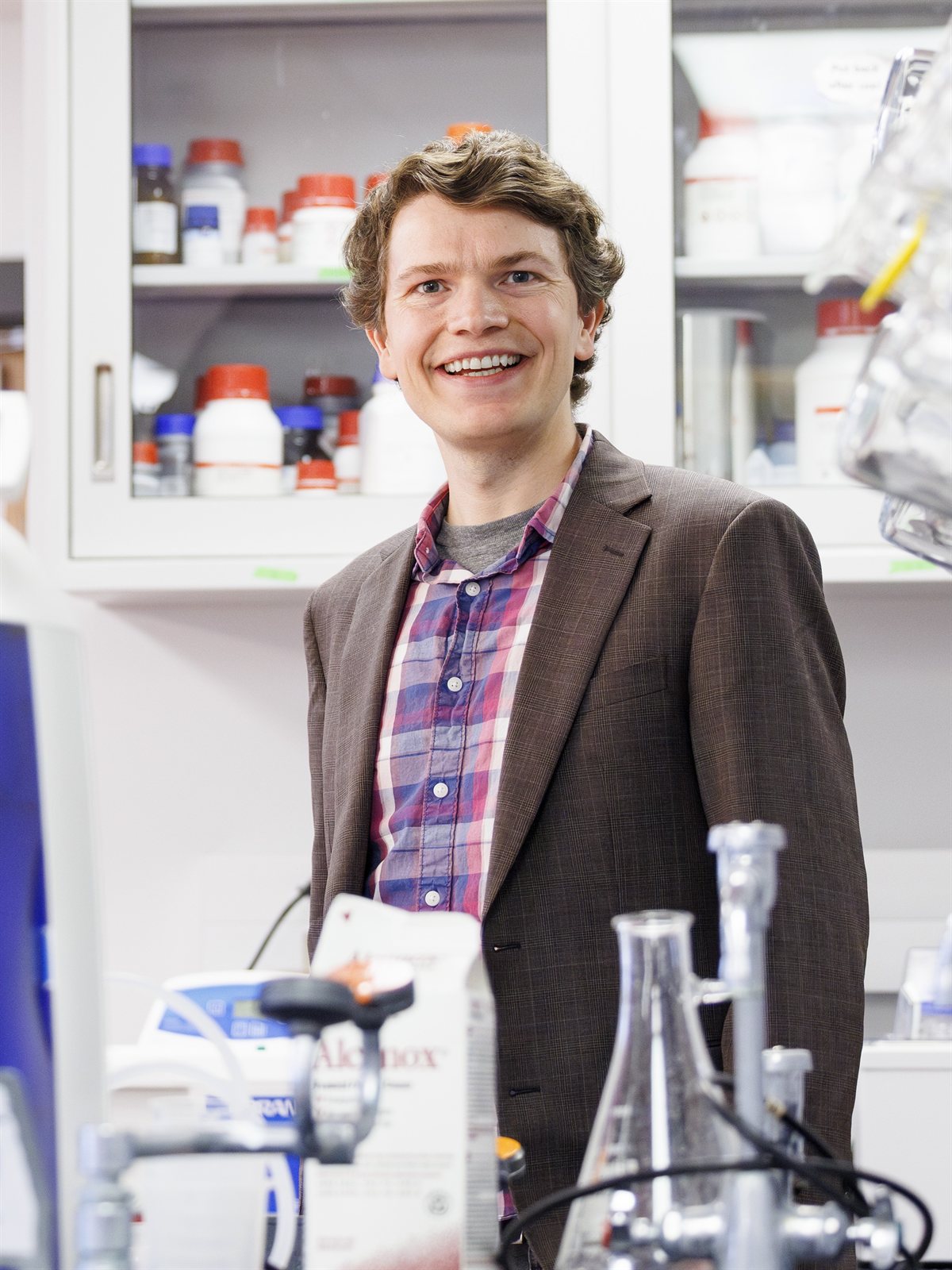
Work in the Checco Lab focuses on identifying receptors targeted by endogenous peptides using novel chemical probes and labeling strategies. His team uses mass spectrometry to identify and characterize native signaling peptides as well as studying the role of peptide isomerization in cell signalling and receptor interactions.
Dr. Checco’s interdisciplinary work has earned him recognition in the form of the NIH Maximizing Investigators' Research Award (MIRA), the COBRE Rising Star Award from the National Association of IDeA Principal Investigators, and the Young Chemical Biologist Award from the International Chemical Biology Society. He also serves as the Co-Chair of the Student Activities Committee for the American Peptide Society, helping to mentor early career peptide researchers.
Our conversation highlights Dr. Checco’s path as a researcher, the novel chemical strategies his lab uses to uncover hidden cell-signaling pathways, and his outlook on the most exciting frontiers in peptide discovery.
CS: Was there a specific project or mentor early in your training that inspired you to focus your research on chemical biology and peptide science?
James: When I was in college and doing my undergraduate studies, I was very excited by both organic chemistry and biochemistry. I had done a little bit of research in both areas: I spent about a year in synthetic organic chemistry, and then I did another year on an enzymology project. I knew I wanted to go to graduate school, and I knew I wanted to work in an area that combined these two subjects, but I didn't really know what chemical biology was. I was not introduced at the undergraduate level to what modern chemical biology research is about. It really wasn't until I started thinking about graduate schools, reading people's profiles online, and actually visiting graduate schools before I realized that chemical biology was its own discipline and was an area of very active and important research.
There is a moment that stands out as pivotal in my mind during my visit to the University of Wisconsin, which is where I ultimately ended up going for graduate school. I learned a lot during these visits about different research areas. Wisconsin did something that was really cool: during the visit weekend, they had each faculty member who was recruiting students get up and give basically an elevator pitch for their research. We got to listen to a ton of back-to-back little 2-minute presentations on different types of research. My future PhD advisor, Sam Gellman, got up to give his elevator pitch, and he talked about these molecules called alpha/beta-peptides, which have both the natural alpha-amino acid residues in them, but then you can also chemically incorporate these beta-amino acid residues, which do not occur in nature, but can have beneficial properties. When he explained that, a light switch went off in my head, because I realized that you can use the power of chemistry to not only synthesize biomolecules like proteins, but that, using chemistry, we can put whatever sorts of functional groups we want into them in order to answer the biological questions or to maybe develop new drugs and things like that.
Ultimately, that really inspired me. I ended up going to Wisconsin and working with Sam, largely because of that realization that this is just the coolest stuff that I could imagine.
CS: What is a foldamer, and how did your work on foldamers and protein-protein interactions in Sam Gellman’s lab set the foundation for the synthetic peptide tools your group builds today?
James: A foldamer is a kind of oligomer that has a discrete folding propensity. That means it can fold into some sort of shape in solution. They are peptide-like molecules, but do not necessarily contain proteinogenic alpha-amino acid residues; they contain other types of non-naturally occurring residues, specifically modifications in the backbone. It’s not just different side chains that don't exist in nature, but actually a fundamentally different backbone. It kind of looks like a peptide, it's not a peptide, but it can still fold into, say, a secondary or maybe even a tertiary structure in solution.
On a technical level, the chemical synthesis of peptides, and just all of the skills gained working in that lab in terms of how to make peptides, that, of course, is something that I still do in my lab. Every graduate student in my lab knows how to make peptides and goes through that whole process and, as a result, every project in my lab has peptide synthesis at some stage.
Working in that lab really taught me the approach of chemical biology in the sense that you can synthesize molecules that you can use to probe biology, and thinking about biology from that point of view: we have a biological question, in order to answer it, let's design and synthesize a probe that we can use in order to study and answer that question. I think the research that I was doing in the Gellman lab really helped me develop as a scientist who thought that way.
CS: Does that folding propensity or behavior change depending on the pH or the salt concentration?
James: The environment the molecule is in will change the ability for it to fold. The work that I was doing at the time, we were really interested in molecules that would fold into discrete structures in aqueous solution for biological modulation. I was working on designing foldamers that could modulate protein-protein interactions. For that to work, the folding has to be present in physiological conditions, very similar to what it would encounter inside a living system or inside a cell. The Foldamer field is very large, and there are people that are interested in designing molecules that can fold into discrete structures in a wide variety of contexts.
CS: Is anybody looking at extremophiles or that kind of thing?
James: Ooh, that's a good question! I'm not sure off the top of my head if people are looking to design foldamers for applications in those types of scenarios.That would be really interesting.
CS: During your postdoc, you shifted your focus toward more analytical chemistry. How did that shift alter your perspective on cell-signaling discovery?
James: The reason my postdoc came about, I think, was for two main reasons. One, in graduate school, I did a little bit of mass spectrometry, and I thought it was just the most amazing technique that I had ever seen. It almost seemed like magic, and I loved being able to collect mass spectra on the molecules that I made. I thought it was very, very cool. I knew in my postdoc that I wanted to do more mass spectrometry. I thought that would be a very helpful skill that would allow me to develop new projects that were very different from what many other people with similar PhD backgrounds to me would be able to develop.
The other thing is, I had spent a lot of time in graduate school making synthetic peptides and using them in biological systems. It got me very curious about how nature actually uses endogenous peptides in order to modulate biology. When I was looking for a postdoc, ideally, I was looking for someone who did mass spectrometry, and someone who was studying endogenous peptides, and Jonathan Sweedler at the University of Illinois at Urbana-Champaign, does both of those things, and so he was a perfect fit for what I was interested in. I went to his lab and I learned how to do many different LCMS techniques, mostly focused on peptides, but I also got skills in a number of other areas there too.
What I learned doing the projects in that lab is that there are many, many peptides that are made by cells and released whose functions we do not really know anything about. As I was thinking about how I would pursue an independent career, this question of what some of these other understudied peptides were doing and how we might build approaches in order to answer that question became a big focus of mine.
CS: After you've identified a novel peptide, are you looking back in the genome to identify where it comes from?
James: Many peptides can be predicted from the genome and from the transcriptome especially. There are a set of peptides that come from what are called “prohormones”. Most neuropeptides and peptide hormones come from these prohormone precursors. A lot is known about how those precursors are processed, so we can predict something about some of the peptides that are going to be generated, although we can't predict all the post-translational modifications that they're going to have. But we can predict what their base sequence will be for some of these peptides.
However, there are a number of peptides that are not in transcriptome databases and in proteome databases for a variety of reasons; there are these things called short open reading frames that were actually ignored very early on when people were looking at the genome because they figured, “oh, this is too short, this can't be a real protein”. It turns out many of them are actually transcribed and translated and lead to these smaller proteins. There are a number of researchers that are looking into uncovering these hidden peptides that are not present in the published proteomes. But even for known, or at least predictable peptides, we can detect, by LCMS in a peptidomics experiment, hundreds of these from a given tissue. And the functions of most of them are completely unknown right now.
CS: You already answered a secondary question I had, which was, “what's your favorite analytical method?”
James: Absolutely mass spectrometry.
CS: How do the chemical probes your lab builds work to capture peptide-receptor interactions? What made you choose this specific strategy?
James: I alluded to it in the previous question, but coming into my independent lab, I was curious about how we could build techniques to identify and understand the functions of some of these understudied peptides. One particular class of understudied peptides that I was interested in is bioactive peptides that do not have known receptors. There are a number of these peptides that are produced by cells. There's very good evidence that they have biological activity, but what proteins they're signaling through is unknown. In order to try to address this, my lab has been pursuing what is called an affinity-driven covalent labeling approach to capture peptide-receptor interactions on the surface of living cells. We've been focused on the use of a chemical functionality called an aryl diazonium, which can selectively covalently modify either tyrosine or histidine residues on protein binding sites.
Tyrosine and histidine residues are actually relatively highly abundant in these peptide binding sites on receptors. We envisioned that pursuing this aryl diazonium chemistry would allow us to have a relatively general approach to labeling peptide receptors. The idea is we can synthesize an analog of this bioactive peptide that we're interested in that has an aryl diazonium group; we can treat cells with this peptide, and the cell binds to its receptor and forms a covalent bond. Then we can lyse the cells, we can grab the peptide-receptor conjugate, because we have a tag on that peptide that we incorporated beforehand, like biotin, and then we can enrich the labeled receptors and identify them using mass spectrometry-based proteomics.
One advantage of this approach that we really like is that it's relatively unbiased towards the type of proteins these molecules may be interacting with. We don't need to decide beforehand, “we think this is interacting with this particular class of receptors, or this particular type of protein,” we can instead add the peptide to the cells and see what interacting partners end up coming out.
CS: You're doing this in living cells, do you do it for different cell lines that are specific to different tissues?
James: Right, exactly. We use cell lines that have good evidence to express the types of receptors that we believe would be there. Right now, we’re in the process of developing this chemistry, and we're using this in model systems for known peptide-receptor interactions to really figure out how to get everything to work the way that we want it to.
CS: What led you to study D-amino acid-containing peptides? What is the prevalence of genes that code for enzymes that convert amino acids from L- to D- configuration?
James: I was first introduced to D-amino acid-containing peptides in my postdoc, in the Sweedler lab. Jonathan Sweedler, as I mentioned before, is a mass spectrometrist and an analytical chemist, and his lab was very interested in these molecules, primarily because they're a really interesting analytical challenge. Peptides with D-residues do exist in a number of different animals. They're catalyzed by an enzyme called an isomerase that generates the single D-residue in the sequence. But as you might imagine, you can't predict where a D-residue is going to be based on the genome or the transcriptome, and you can't detect a D-residue very easily using techniques like mass spectrometry, which is the primary method used to characterize endogenous peptides. D-amino acid-containing peptides in some ways are nearly invisible to most approaches that people use to characterize peptides.
Jonathan's lab, as well as a number of other labs, have been interested in developing methods to detect D-amino acid-containing peptides and identify them. As I was working in that area and learning a lot about it, I realized my interest lay not only in trying to detect these molecules, but really in understanding what role the isomerization plays in biology, and very little has been done looking at the impact of the L-to-D residue isomerization on peptide-receptor interactions. In my own lab, we've been looking at how the conversion of stereochemistry of one residue in a peptide alters the function of its signaling at its receptor. We've discovered a number of receptors for these D-amino acid-containing peptides, and we've seen a lot of really interesting biology about how isomerization is used to regulate chemical communication.
Your second question asked about the enzymes that catalyze this. There are a number of known racemases, which catalyze free amino acid conversions from L-stereochemistry to D-stereochemistry. For free amino acids, there are D-amino acids that are present in biology. D-serine is known to be synthesized by serine racemase. D-serine is a big one that plays a major role in neurochemistry; a lot about that is known, and still a lot can be discovered. There's a lot of people working on that.
But in contrast, there is actually very, very little known about isomerases, which would be the enzymes that catalyze conversion of an amino acid residue within a peptide chain. One of the biggest open questions in this field right now is what do these enzymes look like? How do they function? And that's a good, important area for future research.
CS: For each of these isomerases, do they act on a certain class of amino acid?
James: We don't know. A few have been proposed in the literature, but very few followup studies have been done on these enzymes. And so very little is known about how they actually function.
CS: Your lab synthesizes peptides with a lot of unique chemical entities. Generally speaking, how can automated peptide synthesis support those types of specialized R&D workflows?
James: In my lab, we do both automated synthesis, and we still do quite a fair amount of manual synthesis too. Going through and making a peptide manually helps you understand the process and what's going on. I find that a lot of my students still prefer to make some of the shorter peptides manually. I think that's just because it takes a while to set up the instrument to do synthesis, at least with what we use. Sometimes students just think it's easier to just go in and weigh out the single amino acid and start the coupling and then go on to the next one, especially with really short sequences.
We find that automated synthesis is very helpful for the longer sequences. We synthesize peptides of a variety of lengths, things as short as three residues up to greater than 60 residues. For those longer peptides, automated synthesis is absolutely the way to go. Of course, there's a major saving in time by being able to set it up and not have to work on it every hour or so. But in addition, the instruments, if working properly, allow more consistent addition of reagents and more consistent mixing times and things like that. We've found, especially for more difficult syntheses, the consistency offered by automation helps to give better results virtually all of the time. So we really like automated synthesis, but I think there's still a place for manual synthesis for a variety of reasons.
CS: What can model organisms like sea slugs teach us about human biology that we can’t easily learn by studying human cells directly?
James: My lab works with a number of different model organisms; the sea slug is a really good example of a great model organism for neuroscience. Aplysia californica, this slug, has a relatively small number of neurons. It has about 20,000 neurons versus over 80 billion neurons in a human, for example. Some of these neurons in Aplysia have relatively large size, so they're very easy to identify and manipulate. Many of these neurons actually have very well defined functions, so you know that this neuron, or this exact neuron circuit, controls this behavior. That's something, in my understanding, that is virtually impossible to tease apart in a mammalian brain, but we can do that in an Aplysia central nervous system.
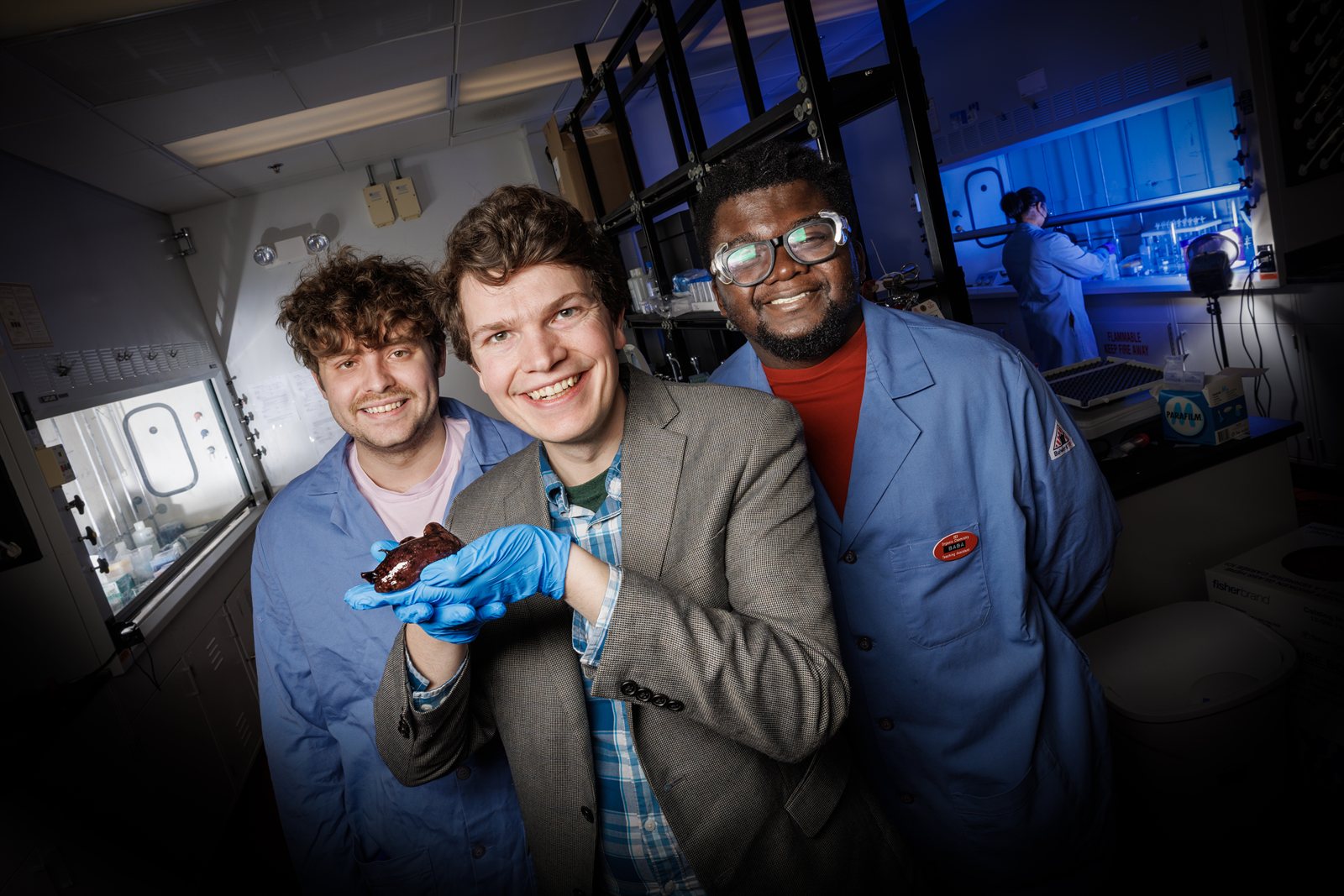
Despite its simplicity, though, Aplysia is still capable of relatively complex behaviors, including learning, and it uses the same sorts of transmitter molecules that animals like humans use. So it still uses serotonin, glutamate, and dopamine neuropeptides. The peptide sequences are different in the slug versus in the human, but it still uses the same types of molecules, and in very much the same way, functionally, at the neuronal level. The sea slug is a really good organism to study the chemical basis of neuronal transmission and some of these more complex behaviors like learning. And I should note that Eric Kandel won the Nobel Prize in 2000 in physiology and medicine for his work with Aplysia to understand the chemical basis of memory storage.
CS: What benefits to your research do you experience working within an interdisciplinary center like the NCIBC?
James: NCIBC stands for the Nebraska Center for Integrated Biomolecular Communication. That is a group that is really focused on the development of interdisciplinary biomedical research here at the University of Nebraska. As you mentioned, it's an interdisciplinary center with a lot of people on campus from very different departments. This has benefited me as a young researcher here in several ways.
It's a great way to get to know other researchers on campus and then get feedback and different perspectives on the research that you're doing. I know in talking with some of my colleagues in different departments about the projects that I'm working on, they'll often suggest very cool directions, and important directions to go down, that I probably would not have thought about if I kept so focused in my chemistry brain. That really benefits the research in terms of thinking interdisciplinarily. That's led to a number of productive collaborations as well. It has been really helpful for me getting my lab off the ground.
Another major benefit of a center like this is that they can provide funding for pilot projects, funding for students, things like that, that can really help me to explore interdisciplinary research, much more easily than I would be able to otherwise.
CS: Your work with the NCIBC focuses on peptides derived from cocaine- and amphetamine-regulated transcript (CART). What makes these peptides an interesting target for peptidomics and receptor discovery in metabolic health?
James: The CART peptides are a great example of what I was talking about earlier, a bioactive peptide that does not have a known receptor. There's fairly convincing experimental evidence to suggest that CART peptides play a role in metabolism, that they play a role in proper beta cell health in the pancreas, and they play a role in glucose regulation. But progress towards really being able to explore CART signaling as a potential therapeutic for metabolic disorders like diabetes has been severely limited because we do not know what receptor the CART peptides signal through. Learning about CART and other peptides in the same kind of class is what really inspired me to think about identifying receptors for bioactive peptides.
This idea of identifying receptors for bioactive peptides is not limited to endogenous peptides like CART, but could also be extended towards peptides like toxins from animals or natural products for which you might want to know what receptor these molecules signal through. CART is a great example of that type of molecule.
CS: Looking back at those first few years setting up your own lab, what was the most surprising challenge or rewarding milestone?
James: Maybe this was a challenge that kind of turned into a milestone; at the beginning, when starting a lab, a lot of the questions that I kept asking myself really amounted to things like, “Will this work? Will we be able to do the sorts of things that we are trying to do?" Those are good questions to ask because important research problems, oftentimes, are ones where it's not obvious that you're going to be able to do it successfully. You have to take these sorts of risks, and that was certainly a challenge early on.
But I think one of the most rewarding milestones is starting to realize that the questions start to change from “Will this work?” to rather, “What are going to be the next steps?” and “What are directions we can go now that we've established these principles, or we've developed these tools?” And so now we're asking questions where we've shown some things that can work, and we have dozens of different directions to go with them, and we're asking, “What's going to be the most productive direction?” That's a really rewarding milestone to have that change in the questions that one's asking oneself.
CS: How do you foster a lab environment where people from different research backgrounds learn to speak each other’s "scientific languages"?
James: In my lab, there are many different types of experiments that happen. We do a lot of what could be classified broadly as chemical biology, but we do a lot of synthetic organic chemistry, bioanalytical chemistry, particularly chromatography and mass spectrometry, a lot of molecular biology as well, and cell-based biology. We're doing a lot of different things, and one thing that I really try to do with my group is make sure that all students in the group understand all of the aspects of things that are happening in the lab as much as possible. Rather than having people be siloed off, you know, “Okay, you're the chemical synthesis person. You're gonna make it and give it to the biological person.” As much as possible, I want someone to do both steps of that.
Certainly, there will be people who will have more expertise in some areas than others, but I really want people to be familiar with all of the techniques that we're doing in my lab. I expect students in my group to be familiar with the chemistry behind solid-phase peptide synthesis, and be able to draw reaction mechanisms for the basic sorts of reactions that we do. But also explain to me how a mass spectrometer works in a bottom-up proteomics experiment. I think the answer to your question is that by working in this group and by talking about all these different things through group meetings and other discussions that we have, everyone adopts kind of a new language that is an amalgamation of all these different interdisciplinary research areas.
We have a lot of (external) collaborations, and there are a lot of collaborations within my lab where people are working together on projects. Not everybody is doing absolutely everything related to a project, but I hope that students will understand all the aspects of the things that are going into projects, and as much as possible, a student will work on most aspects of their project, from the synthesis to the characterization to the biological evaluation.
CS: What is your core philosophy when helping graduate students become independent researchers?
James: Beginning a PhD is about becoming an independent scientist. As much as possible, I really strive to encourage my students to work independently and take ownership of their projects from the very beginning. While I will pitch them projects and give them ideas of places to start, even from early on, I'm hoping that they will start to design their own experiments; they'll start to think about how to go about achieving the overall goals that we want, and then eventually start developing their own goals and their own ways to push the project in new directions.
That being said, I don't give my students projects and then just let them go off on their own forever without checking in. We meet on a weekly basis individually, as well as during larger group meetings, and my door is virtually always open for students to come and ask me questions. My strategy is really to promote and encourage independence, but then be readily available to talk through ideas that they have, to troubleshoot experiments, things like that.
CS: How do you fail productively?
James: I think this is a great question. This is something that I actually do talk to my students about fairly frequently. To me, the answer has to do with designing experiments and designing projects such that, no matter the outcome, you will learn something. That's not obvious to everyone when they start, and sometimes it's not possible to do that, but thinking about project design and experimental design, and thinking through the possible outcomes of an experiment, and trying to design it such that no matter what happens, at least you come away with some piece of information, I think is extremely valuable. Once you start thinking like that, at least for me personally, research becomes so much more fun. I remember in my early days as a scientist, being really stressed out, you know, “This experiment failed, what does that mean for my project? What does it mean for my future?” But if you can learn something from it no matter what, then even a “failed” experiment can be an exciting one that teaches you something and tells you what the next step might be.
This comes up in group meeting a lot, and I don't know what my students think of it, but sometimes when there is a completely unexpected result, I think they sometimes are sad or stressed out about it, and I get very excited about it, because I want to figure it out: this is interesting, what's going on? We should probably try to solve this because it might be something really cool!
CS: Outside your own lab, what recent advancements in peptide science are you most excited about?
James: The peptide community is amazing, and the whole community does a lot of awesome stuff, really pushing the boundaries of our field forward. I regularly attend both the Gordon Research Conference on peptides, as well as the American Peptide Symposium where I get to see a lot of really cool things. All the stuff that happens at those conferences, I'm very excited about. Some specific examples of early to mid-career researchers that I follow and that I've been impressed by their work, are Monica Raj at Emory, who has developed powerful tools to profile protein post-translational modifications in really creative ways. Also, Elizabeth Parkinson at Purdue, who's made really impressive progress in understanding natural product peptides and their synthesis. And also, my friend and former colleague, Ross Cheloha at the NIH Intramural Research Division, is developing innovative ways to study and manipulate peptide-GPCR interactions that always inspire me when I see the cool stuff that he's doing.
CS: Many signaling peptides and cell-surface receptors remain uncharacterized or deemed "undruggable." Where do you see chemical biology tools making the biggest dent in therapeutic discovery in the near future?
James: Chemical biology, in general, impacts nearly all aspects of therapeutic development. The largest impact probably will come in terms of discovery of new therapeutic targets, so discovery and validation of totally new targets that we've never really developed molecules to target before, as well as the development of new ways to target these molecules. Very recently, there was the first FDA approval of a PROTAC (proteolysis targeting chimera), which demonstrates the power of targeted protein degradation for human therapy. I think chemical biologists will continue to really innovate in terms of thinking about new ways that we can combat disease and benefit human health.
CS: For a student sitting on the fence about what field to pursue, what makes peptide chemistry and chemical biology such an exciting space to enter right now?
James: In the last several years, both the pharmaceutical industry, as well as the general public, have become much more aware of peptides than they probably were before. A lot of people now understand the potential of peptides as therapeutics, and are highly motivated to advance this field. For a lot of students that are thinking about career paths and thinking about directions to go, I imagine this means that peptide chemists are highly sought after for a number of different positions and different industries. I think that now is a good time to be a peptide scientist, and I'm certainly happy to be one.
CS: If you could instantly solve one chemical or biological mystery in cell-to-cell peptide communication, what specific signaling pathway or receptor family would you choose?
James: Alluding to what we talked about earlier, this lack of information about these isomerases for these D-amino acid-containing peptides; if I could instantly discover the identity of every isomerase from every animal, I think that would open up a ton of doors in terms of understanding more about how this elusive post-translational modification really affects cellular communication. I think it would be very, very exciting and very important.
CS: When people think of major research hubs, they usually think of the coasts. What makes the Midwest such a great place to build a research program?
James: The Midwest has many phenomenal research institutions, both universities and industry, and that allows scientists to work in intellectually stimulating environments. I think you're right, a lot of people think of the coasts, but there's so many great places to do research in the Midwest.
Another important factor, I think, is quality of life, and the quality of life in the Midwest is high. Depending on where you live, the cost of living can be relatively low, traffic can be low, commutes can be short, and these factors make day-to-day life really enjoyable. I personally find that I do my best work in my career and my best science when I'm happy and enjoy other things in my life as well. And so I think the Midwest is a good place to live, and therefore becomes a good place to build a career.
CS: How do you like to spend your time outside of the lab?
James: I have two mini goldendoodles, a seven-year-old named Wolfie and a three-year-old named Beast. They are adorable and cuddly, and are a great time. There are a number of really good dog parks here in Lincoln that we like going to. There are a couple of cool dog bars where you can go and dogs can hang out at a bar, which is fun too. We like to spend time in those sorts of places and let our dogs play and have fun, but also get to see other dogs because they're such a cool animal.
I'm also a clarinet player. I play in the Lincoln Community Concert Band here in Lincoln, Nebraska. There's a group of about 80 non-professional musicians that regularly rehearse and perform in our community. This is a great way to take my mind off of science, at least for a bit of a time every week. That helps me to avoid burnout and keep myself engaged in my work when I'm here. Playing music is very rewarding in that way.
James Checco’s work shines a light on the ever-growing potential of peptides to revolutionize human health and disease as he works to uncover novel peptide targets. We’re grateful for his insights into the frontiers of chemical biology and look forward to seeing how these discoveries shape the future of peptide therapeutic development.
A conversation about peptide therapeutics, drug discovery, and the future of digital discovery.
An interview on greener SPPS, peptide chemistry, and mentoring independent researchers.
Explore a career in peptide science and the development of native chemical ligation.
In this video series, we provide a 2 hour mini-course on the fundamentals and how to perform SPPS.
CSBio is a leading peptide instrumentation manufacturing company located in Silicon Valley, California.
CSBio provides research scale peptide synthesizers, pilot scale peptide synthesizers, commercial scale peptide synthesizers, and DNA/RNA oligonucleotide synthesizers.