The role of temperature in Solid Phase Peptide Synthesis (SPPS)
This case study explores the role of temperature on speed of synthesis and crude purity
We continue our interview series profiling the leaders of modern peptide science with Professor Beatriz G. de la Torre, a scientist whose career spans continents and whose research is driving the shift toward sustainability across the field.
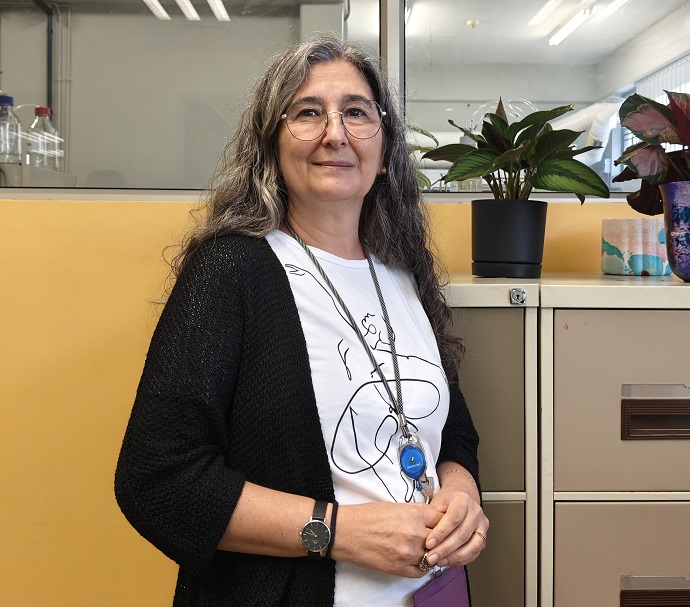
Professor de la Torre is a Research Professor at the University of KwaZulu-Natal in South Africa and a long-standing authority in the chemistry of peptides. A prolific researcher who has authored over 250 scientific articles, she has dedicated much of her career to refining peptide synthesis methodology. Her current mission is one of transformation: making Solid-Phase Peptide Synthesis (SPPS) more sustainable by replacing hazardous solvents like DMF and DCM with safer, environmentally friendly alternatives that maintain industrial performance.
Her work bridges the gap between academic discovery and industrial scalability, ranging from the development of real-time monitoring tools to innovating greener protocols for protected peptide cleavage. Beyond the bench, Professor de la Torre is a dedicated mentor who has guided dozens of PhD students and postdocs through the complexities of laboratory research, fostering the next generation of "green" chemists.
In this interview, we discuss Professor de la Torre’s journey from Barcelona to South Africa, how the demand for peptide therapeutics is driving the process to be greener, a holistic approach to sustainability in chemical synthesis, and her perspective on how to lead students toward independent discovery.
CSBio: You have had a distinguished career across several continents. Looking back, was there a particular challenge or idea that first drew you to the complexities of peptide science?
Beatriz: This is a great question, because of course, when I started my career, I never thought that I would be working in peptides. The only thing that was clear was that I wanted to do research. When I finished my bachelor's degree, I said, “Okay, I will do my best to at least earn a master’s degree, and let's see what happens.”.
I was thinking that I would be working in small molecules, because at that time, the pharmaceutical industry was focused on them. I was looking for a place to do something, and I received a phone call, and they offered me a position to pursue a PhD in peptides. I accepted, and now, I'm here. In the beginning, I was working in glycopeptides.
CSBio: What makes glycopeptides unique? How do those behave differently than regular peptides in the context of synthesis? Is there a special methodology you have to use, or is it slightly different chemistry?
Beatriz: The kind of glycopeptides that I was making at that time, the linkage between the peptide and the sugar was very sensitive, so I had to be careful with the TFA, with strong bases, with the things that we normally use in peptide chemistry. This was my master’s degree and part of my PhD. I have more than 30 years working in research, and I have been working with many, many things. I started with glycopeptides. After doing glycopeptides, I moved to oligonucleotides, and I synthesized combinations, conjugates that have a moiety that was a peptide plus oligonucleotides, then I moved again to make just peptides; I know a little bit of all the biomolecules.
CSBio: Has leaving Europe changed your perspective on global sustainability in peptide science? Do you feel like people approach sustainability and chemical synthesis differently geographically, or do you feel like everyone's kind of got the same idea, that we need to move this in this direction?
Beatriz: I think that this is something global, that it does not depend on the continent. It's only recently that people are worried about sustainability, especially in peptide science. Several years ago, nobody thought that peptides would be drugs in the market, or so successful, because they are very expensive, and nothing was in the market, or in the pipeline with promising results.
The change arrived with the GLP-1 peptides. Why? Because now, we have to produce tons of peptides, and they are long peptides; this was unthinkable, to think that we would put a peptide in the market that has more than 30, even more than 40 amino acids. And now, we have the need to make it more sustainable and greener because the level of production is huge.
CSBio: Right, the demand has gone up so much– it's probably greater than one-to-one, the process intensity of it relative to the demand.
How would you describe the "scientific spirit" or culture at the University of KwaZulu-Natal to someone who has never been there?
Beatriz: I think that it's like everywhere. The system here in South Africa is almost the same as that in the UK for the university. They have a tradition of research and curiosity. Regarding the students, we have to have in mind the past of the country. And you can see this because several years ago, Black people in South Africa did not have much access to the university; so, they are quite new to the university and to research. But they are curious and they want to be there.
CSBio: You answered this question a little bit already, but what would you say, in the industrial setting, is pushing the shift to sustainable SPPS? We talked mostly about the magnitude of the output, right? For example, the massive demand for current GLP-1 drugs. Are there any other factors contributing to that? Do you think it's political, environmental, kind of all of it?
Beatriz: I think that it is everything together: the higher demand, and, on the other hand, the regulation is becoming more strict. If you are producing more peptides and the regulation is more strict, you have to look for the way to produce them in the “right" way.
CSBio: For producing peptides, when using tools like thermal energy, such as using heat exchangers or other heat options, how does that align with sustainability goals and how that might influence the process development?
Beatriz: This is quite difficult to answer, because on one side, I think that nothing is perfect. If you use heating, for instance, you can reduce the time, the efficiency of the coupling can be better, the efficiency of the deprotection can be better. All the processes can be more efficient, then you can have better, pure crude. This is beneficial downstream, in the purification, but then you have a penalty, that is, that you are using energy.
CSBio: Right, so then you get people that might say, “What about this?”, right?
Beatriz: Yes, then, you have to check what the balance is. You cannot evaluate only one point individually; you have to evaluate the global process and see if it's beneficial to use energy to heat.
CSBio: Would you say that using heat, does that allow you to try using different solvents instead of DMF? Maybe you can use other things that behave differently at room temperature, but if you heat them up, they're better for SPPS, and you maybe wouldn't have had that option before?
Beatriz: I'm not sure about the larger scale, because in the lab, it's easier to heat and to control. I'm an academic, and I don't know if it's easy to translate this kind of process to a larger scale. I think that you have to evaluate everything; maybe, the negative cost of your energy to heat may not be worth it, or the amount of solvents that you need for purification is reduced, or maybe the time. Everything is affected.
CSBio: There are a lot of variables, right?
Beatriz: Yes.
CSBio: What would you say are the biggest technical or economic challenges when transitioning a peptide synthesis process away from using TFA?
Beatriz: When we started to look for a substitute for DMF, it looked like it was impossible to find a solvent as good. And the truth is that none are as good as DMF. But now, in larger scale, they are producing peptides using mixtures of green solvents, and it's working fine.
The work to reduce or eliminate the use of TFA is just at the beginning. It looks like it's difficult, but I'm sure that we will get something that will work because there are a lot of people involved. It's not only the academic research; it's the industry that is also putting a lot of effort looking for alternatives to TFA. I think that it will be sooner than later that we have a solution.
CSBio: It sounds like the economic challenge is similar to what you said before about the solvent pressure, right? The regulatory part will make the waste more expensive to deal with if producers don’t move away from TFA.
Beatriz: Yes.
CSBio: You developed the process of using the refractive index for a PAT tool for SPPS. When we're using this on the industrial scale, how do you see that data changing the way that somebody in an industrial peptide development setting would approach developing their process and troubleshooting now that they have that data at that scale?
Beatriz: The refractive index looks like it's very easy to implement on a larger scale. Other techniques that might be used as a PAT tool are not so easy. And you don't need special knowledge; it's very easy to understand the results. It can be beneficial for larger scale, and can help to avoid delays or avoid problems, because you can detect when the problem occurs. You don't have all the answers, but you have more of an idea than if you are not using any analytical tool.
CSBio: A lot of people, when thinking about chemistry and hard sciences, consider them to be very rigid and only analytical. Would you say you agree with that, or would you say that a lot of research, and in peptide chemistry in particular, do you get to be kind of creative in how you approach problems?
Beatriz: I think that it is creative, yes. You need some creativity to go further, because if you are rigid and you are always following the same rules, you will not move forward. Very often in the academic world, we say, “Why don't we try this thing?”. And someone will answer you, “Because if it was so easy, it would have already been improved.”. But maybe nobody tried, because they thought it was a “stupid” idea.
CSBio: But then it's not.
Beatriz: True. You have to be creative, and don't be afraid to try things. Sometimes it's, “But in this paper, they said this.”, okay, but maybe the paper was 40 years ago, and the tools that we have now are different, and maybe the conclusion was not right. Let's try again.
This is very basic, but I think that chemistry is a little bit like cooking. You can always cook the same things, but at the end of your life, you will think ”I’m always eating the same things.”, but if you have a lot of ingredients around, you can try new things and new tastes. I think that in chemistry, you have to do the same. Being in contact with other people, even those that are not exactly in your same field, can give you new ideas, new inputs, and it's very enriching.
CSBio: How do you see the pharmaceutical industry's focus on peptides evolving over the next 5 or 10 years? We talked a little bit about how much the GLP-1s have blown up. Are there other specific classes of peptides or diseases that you see the industry kind of aiming at now?
Beatriz: The GLP-1 peptides opened the way. People are not afraid to develop peptides now; it doesn't matter if it is a longer sequence, because now, it's demonstrated that we can make it. I think that this is a good thing. In the past, nobody was thinking of a drug made from very long peptides. Now, this road is open, and I think that there will be more drugs in the future that use peptides, and size will not be a limitation.
We also have to think about the economic side. The GLP-1s are something that people are making a lot of money from. To lose weight is sometimes mandatory, you need to lose weight, yes or yes, but a lot of people are taking these drugs because they want to look nicer, and they don't need it for health. Maybe they don't mind paying a lot of money for it.
But imagine, for instance, if you have cancer, it's not your choice. If this drug works, you have to take it. In this sense, I think that it will be important for the cost to be reduced.
CSBio: How do you think that academics and industry can partner to accelerate the shift to green synthesis methodologies? What steps can we take to work together to try to move the whole industry a little bit further?
Beatriz: I'm not sure if we are working together, but we are working in the same direction. Fernando and I, we started working on green solvents for solid phase peptide synthesis many years ago, and at that time, there were not a lot of people looking for that. Now all the companies are working on developing something that is greener. Maybe we are not working in collaboration, but we are looking at each other, and we pay attention to what the others are doing, and how to improve. This is a motivation, because we are trying some things, but other people are trying other things, and with this, the speed and progress is very successful.
CSBio: If you could have one thing that you've worked on immediately translated into real-world application, what would it be?
Beatriz: I'm very proud of the work that we are doing in green chemistry, but I'm also focused on antimicrobial peptides. I am always working on peptides that are not difficult to synthesize, that are not very long, because I'm thinking in the easy-to-synthesize and low cost. Antimicrobial resistance is a big problem in the world, especially in poor countries. To have a small peptide with antibiotic properties in the market that can save a lot of lives… that is my dream.
CSBio: That would be incredible.
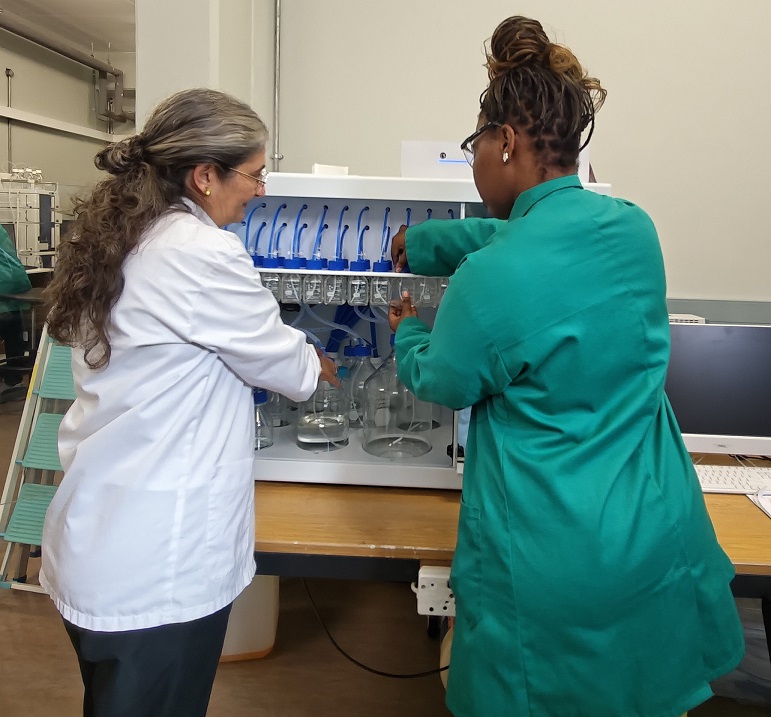
You’ve supervised many doctoral students. In the process of earning a PhD, is there a specific 'turning point' you’ve observed where a student takes ownership of their research and starts truly leading the project?
Beatriz: I don't think there is a general rule, and it's not a “point”. It depends on the student; are they able to develop things by themselves when they have enough confidence? At the beginning, you are not sure about that. “May I add this, or the other thing, or maybe if I modify this, I'm not sure…”. We always say to our students that they can try whatever they want. They have to think about safety, that it's not going to cause an explosion or something like that, but if not, they can try whatever they think that can work, because with only an idea, you cannot be sure: you have to try.
CSBio: Would you say that's one of your favorite parts of mentoring, is kind of just letting students test things out and watching them think about these things and have these moments?
Beatriz: Yes. You have to work with them so that they get this confidence in themselves to say, “We are always doing this, but I read this, and maybe if we apply this thing in our research, it will work.”. And then try. If it works, great, and if not, okay, it's not working, let's go to another thing.
CSBio: Because we still learn something when an experiment fails, right?
Beatriz: Oh, yeah. I think that you learn more when something fails than when it's working, because when something fails, you stop and you have to analyze why it is not working. When something is working, you will go ahead, and that's all.
Or sometimes things that you have made a thousand times, and they work, but in some cases, it's not working, and you have to ask why it's not working. You can make something wrong, or maybe the molecule has something different from the previous cases that you used this for. It's when you have to stop and analyze why something is not working that you really learn.
CSBio: Speaking about early career chemists, a lot of students that are probably coming in now, especially, are thinking about sustainability, and are thinking about green chemistry, and wanting to be in this space.
What do you tell your students now–because a lot of traditional methods are not as green, right? How do you encourage students to keep working toward that goal of wanting this process to be cleaner and better for the environment, and better for our own exposure while we're working with these things? Do you feel like your students feel like there's a lot of resistance to that, or do you think generally the field is in a consensus that it needs to go this way?
Beatriz: No, I don't think that the sustainable process or the greener process is considered “worse” than the traditional ones. I think that it’s the opposite, that if you say that I'm working under green chemistry conditions, it is a plus.
I think that this trend is increasing; people are very concerned that we have to work in better conditions. I have seen the evolution in personal safety working in labs. When I started more than 30 years ago, gloves? There were no gloves in the lab! Instead of using the pipette filler to dispense liquid, people were mouth pipetting. Now it's unthinkable. Goggles for the lab? Never. But now, this is implemented, and everybody is working under safer conditions. It’s the same idea working with green methods.
CSBio: And to close, our final question, not chemistry related, but what interests or hobbies do you have outside of research that you enjoy?
Beatriz: I like to do a lot of things. I like to do manual things. In my free time, I'm always doing things at home because there are always things to fix. I like to have the tools in my hands. I'm the handy woman at home.
I also like to paint using dots. I make something that looks like mandalas, but they're not mandalas. I try to make it symmetrical, but I don't follow any pattern. I find it very relaxing, because you have to put all your attention on that, and then you cannot think about your problems.
I read a lot; I like any kind of books, but my favorites are Japanese authors translated to Spanish. I knit. I do a lot of things. I'm not bored. And, it’s not always possible, but I try to forget about my computer on the weekends.
We appreciate Professor de la Torre sitting down and sharing her perspective on peptide development and fostering the next generation of green chemists. Her wisdom, humility, and innovative spirit are an asset to the peptide community, and her influence will undoubtedly continue to shape the field through the many chemists she has inspired.
This case study explores the role of temperature on speed of synthesis and crude purity
In collaboration with University of California, Davis; UCD evaluated microwave and conduction heating and presented the findings at the 28th American Peptide Symposium
In this video series, we provide a 2 hour mini-course on the fundamentals and how to perform SPPS
Understand what drives peptide synthesis purity, speed, and waste generation
CSBio is a leading peptide instrumentation manufacturing company located in Silicon Valley, California.
CSBio provides research scale peptide synthesizers, pilot scale peptide synthesizers, commercial scale peptide synthesizers, and DNA/RNA oligonucleotide synthesizers.